LED Content Best Practices: What To Show on Your Video Wall To Drive Engagement
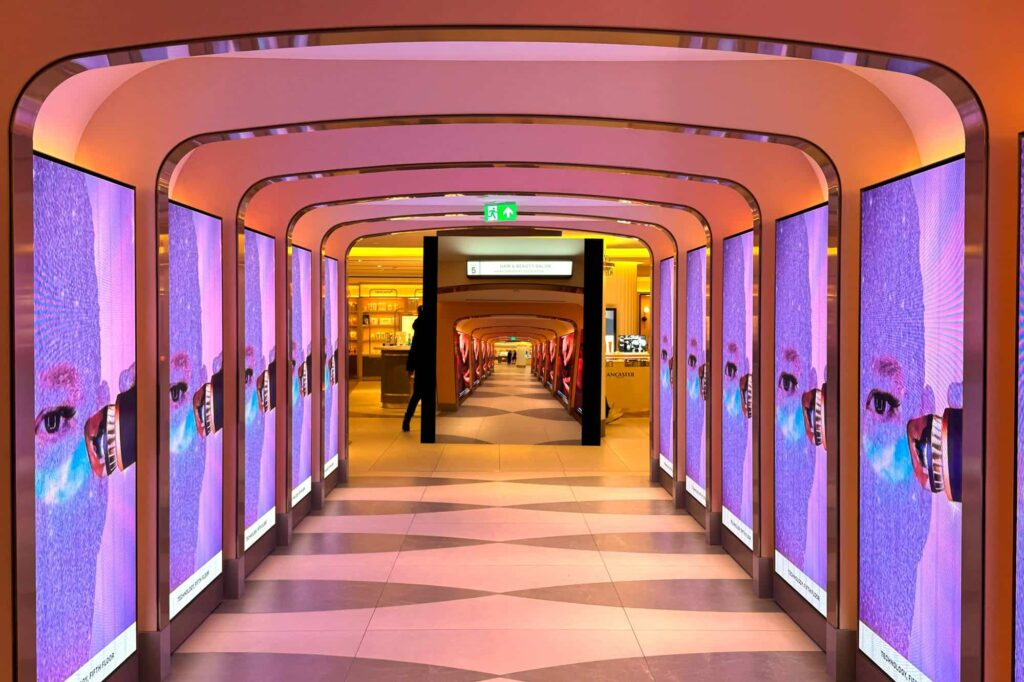
You’ve seen LED video walls all across Las Vegas casino floors, hotel lobbies, and convention centers. The difference between a wall that immediately grabs the attention of viewers and one that fades into the background comes down to content strategy.
This guide focuses on what to show and how to show it so your LED is high performing and becomes a hard-working business asset — not just a visually impressive screen people walk past.
Start With Goals, Audience, and Placement
An LED wall with a singular focus and purpose will outperform those with cluttered messaging or complicated visuals.
Starting with a single objective for each wall, such as driving sign-ups, guiding foot traffic, or promoting an offer, will establish a guide for the rest of the development.
Once the goal is clear, tie it to a measurable key performance indicator (KPI) like dwell duration, QR scans, interactions, or redemptions. Having a specific measurement will hold the campaign accountable to results. Remember, how the audience behaves to your video wall matters just as much as your goal.
A fast moving casino corridor demands different content than a hotel check-in area. Create bold visuals and short messages for high-speed traffic areas and implement long-form storytelling techniques for waiting areas.
Ensure the height, viewing distance, and traffic flow are considered for maximum effectiveness.
Design Fundamentals for LED Video Wall Content
All creatives should be built at the native resolution and aspect ratio of the wall. Designing the wrong format will skew the visuals and create scaling issues or black bars that reduce impact.
Knowing the pixel pitch is equally important. Indoor walls viewed closely benefit from tighter pixel pitches and finer detail, while large outdoor displays need bolder shapes and simpler images.
Also, optimize your files before displaying. Export your content at the correct resolution and efficiently compress for a smooth playback. Large files can stutter or fail completely. Overly compressed files lose clarity, especially at longer viewing distances.
Successful Las Vegas video walls balance visual quality with reliable performance to maximize their campaigns.
Make It Instantly Readable: Contrast, Text, and Layout
In a city as visually intrusive and competitive as Las Vegas, readability is non-negotiable.
High contrast combinations help your message cut through the ambient light and surrounding visuals. Use a combination of light text on dark backgrounds or dark text on light backgrounds for the best engagement. Low contrast palettes typically blend together and lose their effectiveness on LED walls.
Every frame needs a clear message within three to five seconds. That means limiting text, creating a strong visual hierarchy, and guiding the viewer’s eye from headline to supporting detail to action.
Keep your font choices minimal and consistent, but make sure that type sizes are scaled for real viewing distances — messages that look perfect on laptops don’t translate when read from twenty feet away.
Content Types That Drive Engagement on LED Walls
In Las Vegas, there are proven content types that engage audiences and perform better during campaigns.
Here are a few to experiment with for your video wall:
- Branded hero visuals.
- Offers/promotions.
- Live data.
- Ambient “atmosphere” content.
Dynamic visuals with motion play a major role in engagement. Purposeful animation and video consistently outperform static slides with still images and text.
But keep in mind that movement should always support the message rather than distract from it.
In areas where traffic lingers, content loops combine quick attention grabbers with slightly longer storytelling segments. The result is sustained interest without overwhelming viewers.
Brand Consistency and Strong Calls-To-Action
Creating an engaging video wall that has a clear message establishes a strong brand identity with every clip that plays to audiences.
Your brand can quickly create this by consistently using the same colors, typography, logos, and motion style. The content immediately feels cohesive to viewers across any property or event. When viewers begin to recognize those patterns, they process the information faster and associate it with a brand they trust.
Once you’ve established this relationship with viewers, your call-to-action (CTA) will become more important. Make sure they are clear and singular in nature.
Each scene works best when it asks viewers to take one obvious step, like scanning a code, visiting a location, or participating in a future activity.
Use visual clues to emphasize the CTA, like large buttons, arrows, or QR codes that make all actions intuitive.
Interactive and Gamified Content Ideas for Vegas Venues
Las Vegas is known for its huge gaming scene, so play into that natural attraction when creating your video wall. Create interactive and gamified experiences to boost dwell time for passing audiences.
Touch or gesture-based experiences work well in hotel lobbies, expos, and retail environments where people naturally slow down. Menus or product highlights can explore further invite engagement, without overwhelming users with complicated visuals.
Add leaderboards, quizzes, or spin-to-win to play directly into the Las Vegas audience that came to the city to gamble.
Live social feeds and on-screen polls add another layer of engagement by showcasing real people and reactions.
Scheduling, Freshness, and Content Management
One of the biggest mistakes brands make with LED walls is running the same loop all day. Content should shift, based on time of day and event schedules. Focus mornings on wayfinding or light promotions and evenings with entertainment, dining, or gaming.
Content that never changes quickly fades into the background. Subtle rotations and regular updates keep viewers curious and attentive.
Use a reliable content management system to make the process manageable with remote updates, automated scheduling, and coordinated playback.
Measure, Learn, and Optimize With Analytics
LED walls deliver the best results when performance data guides decisions. Metrics like dwell time, interaction counts, and scan rates reveal how the content resonates with viewers.
Your results should correlate directly with the goals you defined at the start of the campaign. Ambient walls will prioritize dwell time, while promotional loops focus on conversions or redemptions.
Optimization will be key to a successful long-term campaign. Review your analytics regularly, gather onsite feedback, adjust creative and scheduling, and measure your gains.
When LED is intentional, readable, dynamic, and data-driven, your video wall becomes more than a visual feature; it becomes a powerful communication channel that drives engagement, action, and measurable results.