LED Screens vs LED Signage | Elite Displays

Businesses needing to attract audiences in the modern advertising age are comparing LED screens vs. LED signage. Both technologies rely on LED display systems that improve brand awareness and promote key messaging.
However, each option serves different business needs based on resolution, viewing distance, and content complexity.
This article breaks down LED technology and gives you information so you can choose the best solution with the highest ROI for your space.
What Are LED Displays? Understanding the Technology
LED displays use light emitting diodes to create bright, colorful images. Every LED contains red, green, and blue diodes that blend together to form full-color content.
Diodes are arranged into pixels and the spacing between each one is known as a pixel pitch, which influences the clarity and resolution.
The term LED display is used as an umbrella category for both LED screens and LED signage. Both rely on the same core technology that evolved from older LCD neon signage.
Historically, LCD systems used backlighting and fluorescent bulbs to create light but the more modern LED displays produce their own light.
How LED Technology Powers Modern Visual Communication
LEDs illuminate when an electrical current flows through the diodes, producing vibrant colors without needing any backlight. The pixel pitch ultimately determines how sharp the image appears. It’s measured in millimeters, and the smaller the value, the higher the resolution for close viewing.
There is a specific term for this smaller pixel pitch value, called surface mount diode, which produces much higher resolutions.
Each RGB LED display can create millions of colors by combining red, green, and blue light at different intensities.
LED Screens Explained: High-Resolution Dynamic Displays
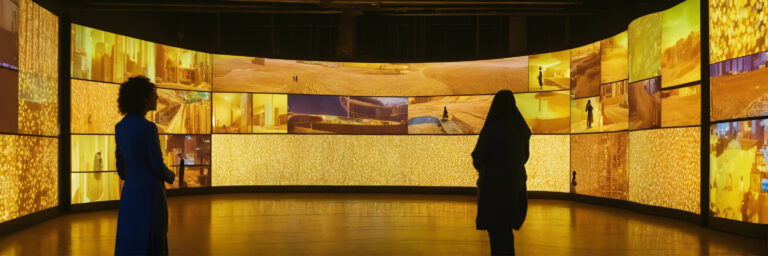
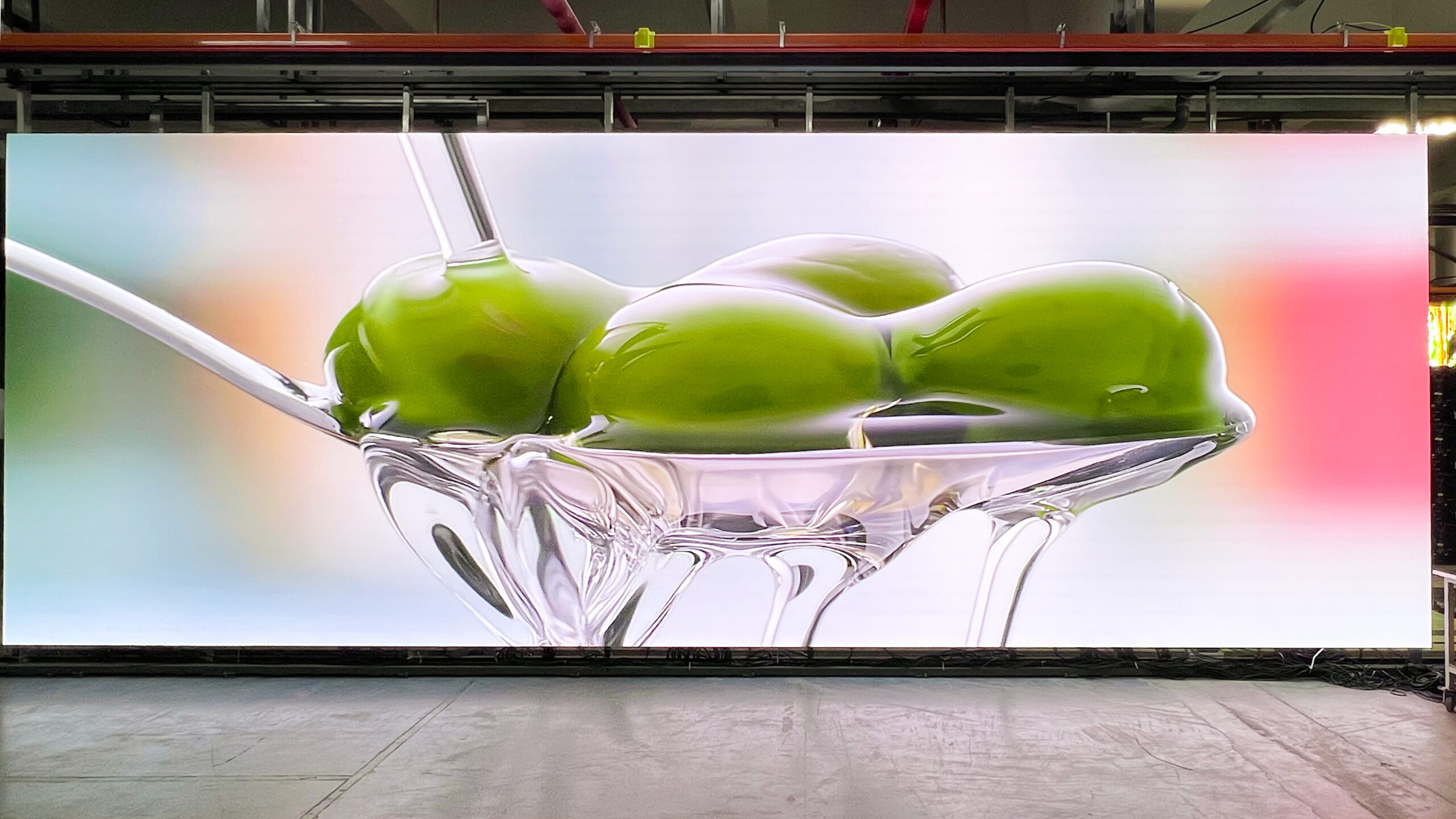
LED screens are high-resolution, large displays that excel in producing dynamic content, like detailed graphics or full-motion video.
A typical LED display screen for business has a pixel pitch between P0.75mm to P4mm for indoor use and P5mm to P10mm for outdoor.
When LED screens are used for indoor use, like in broadcast studios, corporate boardrooms, or control centers, the brightness levels range from 600 to 1,200 nits. Outdoor use, like advertising displays or entertainment venues, uses a brightness ranging from 3,000 to 10,000 nits.
Key Features of LED Screens
LED screens usually include a fine pixel pitch, which typically ranges from 1.5mm to 2.5mm. They are excellent for close-up viewing and support dynamic content, like full-motion video, interactive displays, real-time feeds, and animations.
The superior image quality of LED screens produces high contrast ratios and extremely vibrant colors. Modular panels allow for seamless integration to form large LED video walls of any shape and size.
When connected to a cloud-based content management system, you can update your content instantly through any computer or mobile device.
Best Applications for LED Screens
Environments that rely on dynamic advertising and multimedia fit best for LED screens.
Retail stores can highlight promotions or last-minute deals, while corporate offices use them for presentations, conferences, or immersive event spaces.
You’ve also likely seen LED screens at entertainment venues during concerts or theatre events. Even broadcast studios integrate them for virtual sets and live production.
A control room will utilize LED screens for data visualization and monitoring because of their high-impact communication capabilities.
LED Signage: Cost-Effective Visual Messaging
Instead of needing to commit to a high investment LED screen, a digital signage LED display board is a simpler version, and is designed for basic communication and long-distance visibility.
The signage is primarily used for static or simple-changing messages, and features a pixel pitch ranging from P6mm to P20mm.
The slightly longer pixel pitch makes it ideal for outdoor use, where viewers might see it from far away.
Brick and mortar businesses gravitate toward LED signage because it is durable, weather-resistant, and built for outdoor use.
Key Features of LED Signage
The larger pixel pitch means LED signage is ideal for long distances over six meters. It has a lower resolution, and while that means it doesn’t look as sharp up close, it comes with a lower initial investment.
LED screens for digital signage are also more durable in harsh rain, snow, wind, and heat. It has an IP65 rating, and typically includes a lifespan around 10 to 12 years.
The downside is that you’ll have to manually program your messaging instead of a cloud-based solution, but it still performs well for simple, static messages.
The basic technology saves you money on energy consumption, and lowers long-term costs, in addition to the lower initial investment.
Best Applications for LED Signage
Most of the same types of businesses can still make great use of LED signage, even though it has limited functionality.
Outdoor advertisements, such as billboards and roadside displays, often use LED signage. Airports, hospitals, and universities use it for directional or wayfinding use cases.
Businesses that need storefront identification, digital menus, or brand displays prefer LED signage over the more expensive LED screens.
Public spaces also rely on it for announcements, community updates, or transportation schedules. Additionally, retail stores like it for window displays, shelf pricing, and promotional boards.
LED Screens vs. LED Signage: Key Differences Breakdown
The key differences between LED screens and LED signage for small businesses come down to clarity, content complexity, and viewing distances. LED screens are best for foot traffic and advanced multimedia. LED signage is better for catching the attention of drivers, with basic messaging and it’s more cost-effective.
Here’s a table comparing all the features of each one so you can make a clear decision for your business:
| Feature | LED Screens | LED Signage |
| Pixel Pitch | 0.75mm to 4mm | 6mm to 20mm |
| Basic Viewing Distance | 3 to 30 feet | 30 to 300 feet |
| Content Type | Video, animations, interactive | Text, simple graphics |
| Typical Use | Retail, events, studios | Billboards, wayfinding |
| Cost | Higher investment | Lower investment |
| Durability | Indoor and outdoor | Mostly outdoor |
| Brightness | 600 to 10,000 nits | 6,000 to 8,000 nits |
Resolution and Pixel Pitch Comparison
LED screens use fine pixel pitch ranging from 0.75mm to 4mm, and are known for their high-density resolution. They are best used for viewing distances as close as eight feet with a P0.75mm panel.
In comparison, LED signage uses a larger pixel pitch ranging from 6mm to 20mm, and is better for views 30 feet or farther.
A good rule of thumb when selecting an option is to take the pixel pitch and multiply it by 10 for the suggested minimum viewing distance.
For example:
- P2.5mm = 25 feet
- P10mm = 100 feet
A higher resolution usually means higher cost, but greater clarity when displaying complex visuals.
Content Capabilities and Flexibility
The higher resolution of LED screens is better suited for video, animations, interactive elements, real-time data, and cloud-based updates. A content management system lets you easily update messaging and set remote schedules.
When you only need simple messaging or basic graphics, LED signage is better. Although you have to input your messaging manually, they perform all the essential functions and can reach a larger audience.
Brightness and Environment Suitability
LED screens are flexible for indoor and outdoor use. It typically has anywhere between 600 and 1,200 nits for indoor use, and between 5,000 and 10,000 nits for outdoor use. Images are always clear, even in direct sunlight.
LED signage has good readability from long distances, with a range of 6,000 to 8,000 nits, and is better for outdoor use because of its durable nature.
Both options outperform LCD screens in clarity and durability. LED technology often requires IP65 to IP67 ratings for dust protection and water resistance.
Cost and Investment Considerations
You’ll invest more with an LED screen, anywhere from $800 to $2,000 or more per square foot. The advanced capabilities justify the price if you need dynamic content. LED signage is much less expensive at $200 to $600 per square foot.
It’s possible to rent an LED screen for one-off or special events. Rates are typically around $150 per square meter a day.
If you need a permanent installation and are considering purchasing, keep in mind all total ownership costs, like maintenance, energy usage, and expected lifespan.
Your best option is to calculate the ROI before purchasing. These displays can increase revenue by an estimated 15%, and the CPM is significantly lower than in traditional channels, at around $0.15, compared to $5 for print.
Durability, Lifespan, and Maintenance
You’ll get around 50,000 to 10,000 hours of performance out of LED screens, which is equivalent to about six to 10 years. The modular design lowers your repair costs because only individual tiles need to be replaced.
LED signage lasts a bit longer at around 10 to 12 years, due to its weatherproof materials built for outdoor use. They require routine cleaning, software updates, electrical inspections, and cooling system checks.
Both options outperform LCD systems and consume about 20% to 30% less power.
How To Choose Between LED Screens and LED Signage for Your Business
The right LED option for your business should align directly with your overall goals. Many businesses choose to incorporate a combination of both for full advertising coverage.
You’ll need to consider your content type, viewing distance, budget, and long-term needs. LED screens are better suited for dynamic visuals and close-range viewing, while LED signage displays simple messages better at long distances.
Before investing, it’s best to consult with an LED signage expert and view demonstrations. Below is a beginner’s decision-making framework to get you started.
When To Choose LED Screens
If your business needs to immediately grab the attention of your audience, LED screens deliver high-impact visuals to get the job done. They excel in close-up environments, where foot traffic is about three to 20 feet away, like retail stores, lobbies, and event venues.
Interactive or immersive content made for events, trade shows, or entertainment venues uses LED screens to help engage audiences or provide real-time updates.
Choose LED screens if your business needs the flexibility to show multiple advertising campaigns quickly or you want to elevate your brand presentation in luxury environments, like broadcast sets or showrooms.
When To Choose LED Signage
Businesses looking to engage drivers on their commute or local residents invest in LED signage because it’s better for displaying simple messages at long distances. Think of large outdoor billboards or roadside communication you’ve seen while driving. It’s attractive to businesses because it requires a lower investment than LED screens.
The durability allows the signage to perform in rain, snow, or extreme heat. It also requires less maintenance and has a longer lifespan.
Factors To Consider in Your Decision
Here are a few ways you can determine whether your business will benefit most from LED screens or LED signage:
- Viewing distance: Calculate the pixel pitch based on primary audience distance using the visual acuity distance formula.
- Content requirements: Consider whether you need full-motion video, interactive features, or simple text and graphics.
- Environment: Assess indoor and outdoor environments, lighting, and weather exposure.
- Budget and ROI: Understand the initial investment, operational costs, and expected ROI.
- Frequency of updates: Decide how often the content needs changing, and whether you need remote capabilities.
- Technical support: In-house technical support or professional installation and ongoing services.
LED Display Applications Across Industries
Commercial LED display solutions appear in countless industries because of their versatility. They create immersive environments that draw customers into stores and increase foot traffic. Every industry adapts LED screens or signage based on its specific goals, space constraints, and customer behavior patterns.
Retail and Shopping Environments
Retailers take advantage of LED displays in a number of ways to engage customers. Large LED video walls dominate shopping mall atriums, hallways, and storefront windows, while brick-and-mortar stores use them to highlight promotions and seasonal campaigns.
Smaller indoor LED display screens sit shelf-level to show pricing updates and product availability. Flagship stores are using transparent LED screens to blend digital visuals with window displays, while keeping the interior visibility intact.
Most stores use outdoor LED signage display boards to improve brand visibility and drive in-store traffic.
Corporate and Education Sectors
In corporate settings, LED video walls are used for boardroom presentations and video conferencing calls. Company lobbies incorporate LED panels to communicate mission statements or brand achievements to employees.
Universities are using LED displays for multimedia teaching or to provide students with helpful campus-wide announcements.
Entertainment and Sports Venues
Entertainment and sports venues are some of the earliest LED adopters. Massive LED video walls present replays, live updates, or advertising sponsors during events.
You’ll see LED screens used during concerts and festivals to show the performance in real-time, while ordering food at a vendor or to provide close-ups of the action.
Even theatre and stage production use LED displays for dynamic backgrounds and visual effects.
Transportation and Public Spaces
LED displays aren’t reserved for profit-based companies. Airports use LED displays for flight information or wayfinding. Transportation hubs use them to update schedules or to communicate safety messages.
Hospitals have even adopted LED displays to update patient information quickly and for navigation to specific areas.
Installation, Maintenance, and Content Management
To get the most ROI from your LED display, proper installation and consistent maintenance are essential. Employing a professional installation service protects your investment and guarantees quality assurance.
When it’s all set up correctly, you’ll want to use a content management system to update displays from any location.
Professional Installation Requirements
Setting up LED signage is easier for professionals and involves simple mounting hardware and a basic setup. In comparison, LED screens require power distribution, cooling systems, and integration with content management networks.
There are separate requirements for outdoor installations. You’ll need weatherproof frames, wind-rated mounts, and temperature-resistant components. The professional will ensure that displays meet IP65 standards for water and dust resistance. Continued electrical inspections will check proper grounding techniques, voltage regulation, and surge protection.
Maintenance Best Practices
During each maintenance check, professionals will clean out any dust that reduces brightness or affects clarity. All ventilation areas are cleaned to prevent overheating and the cooling system will go through routine checks.
LED screens will also need continual software updates to improve performance and prevent bugs.
You may need to inspect electrical connections regularly to avoid loose cables or failures. Any modular design is easier to repair without removing the entire display.
Getting professional servicing every six to 12 months will help maintain peak performance and longevity.
Cloud-Based Content Management Systems
A cloud-based system gives you more control over multiple LED displays and what content it shows. It allows you to schedule content, monitor performance, and trigger real-time updates from any computer.
Platforms like the Samsung LYNK Cloud are intuitive to use and require no previous technical skills. It reduces your operational effort and eliminates the need for manual updates, letting you scale easily across multiple locations.
FAQ
What Are the Disadvantages of LED Screens?
LED screens have higher upfront costs and require more maintenance than basic LED signage. The fine pixel pitch screen also consumes more power and needs careful installation.
Which Is Better, LED or LCD Screens?
LED displays outperform LCD screens in brightness, energy efficiency, color quality, and lifespan. You get better visibility in bright environments and more flexible sizing options. LCD screens suffice for small indoor displays, but LED technology is better for large-format visuals with dynamic content.
How Much Do Led Displays Cost?
Pricing will vary based on pixel pitch, size, and application, but LED screens typically range from $800 to $2,000 per square foot. LED signage usually runs from $200 to $600 per square foot.
Make the Right Investment Decision
The choice between LED screens and LED signage depends on your content requirements, viewer distance, common weather conditions, budget, and support needs.
LED screens deliver high-impact visuals and creative flexibility that engage foot traffic. LED signage is reliable, cost-effective, and better suited for long-distance messages to drivers.
LED technology has been popularized because of its high ROI and proven increase in brand visibility. Partner with trusted vendors, such as Samsung or Vanguard, to explore their warranties, product demonstrations, and custom solutions to match your exact needs.
Contact a qualified provider today and get expert guidance to start delivering immersive experiences to your audience.